‘Only a writer will hold conversations between people that don’t exist…’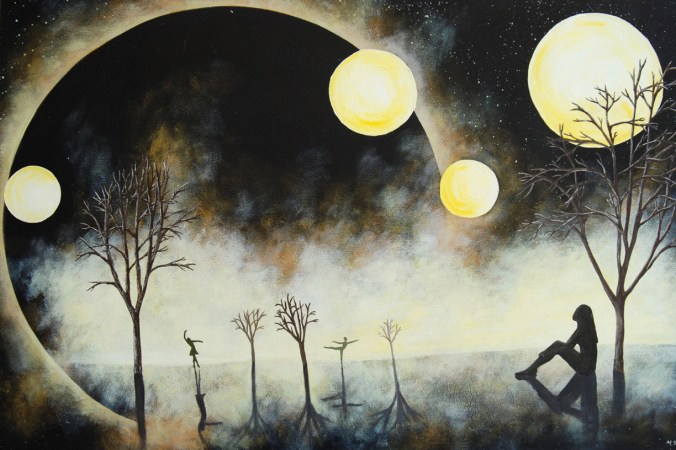
random topics I’m interested in and want to discuss.
‘Only a writer will hold conversations between people that don’t exist…’
Dream Deferred By Langston Hughes

 Black Glove by Lyn Crain Black Glove by Lyn Crain
One single black glove left on the porch is all that is left a union of two. |

I’ve been mulling over the prospect of hosting other writers on Friday as Featured Friday since another blogger approached me about wanting to discuss a post I made more in depth. Is there any interest among my followers to participate in this venture?
If so please email me at lyn.crain@gmail.com.
My intent is for you to email your subject, and the content with all links necessary to connect everyone with you. Whatever info you would like to provide about yourself for the readers. I will post all writers participating in separate entries. If you would like to begin a series of discussion that should appear weekly, I can certainly accommodate that as well.
Looking forward to hearing from you.
Connecting the Dots
A painter may contemplate the various shades of coffee or a sunrise on a canvas.
“Creativity takes courage.” –Henri Matisse
“Genius gives birth, talent delivers. What Rembrandt or Van Gogh saw in the night can never be seen again. Born writers of the future are amazed already at what they’re seeing now, what we’ll all see in time for the first time, and then see imitated many times by made writers.”
–Jack Kerouac
A musician contemplates the sounds of the day imitating each note in perfect harmony.
“Where words leave off, music begins.” ― Heinrich Heine
“Music is the great uniter. An incredible force. Something that people who differ on everything and anything else can have in common.”
― Sarah Dessen
“Music can change the world because it can change people.”- Bono
A writer contemplates each scene to bring it alive to a reader on a page.
“And by the way, everything in life is writable about if you have the outgoing guts to do it, and the imagination to improvise. The worst enemy to creativity is self-doubt.”-Sylvia Plath
“You can make anything by writing.”-C.S.Lewis
Creative imagination, artistic motives, and innovative products are unique to human beings and are the source of their cultural achievement. Creativity is the ability to make new combinations, and it is one of the most highly valued of human qualities. Creativity may prove to be the key to success or failure in the quest for knowledge, in our journey beyond the bounds of the sure and seen and into the exploration of the unknown. A creative thinker is always trying to create something new, and this involves a considerable amount of unconscious rearrangement. These skills are beneficial in our everyday life too.
In general, there are significant recognition works of art as the most private and energetic means of aiding individuals to share in the art of living. The approach may vary, but the connection exists for all. The key is discovering your full potential by expanding your creative base. Our brains are like sponges they continuously expand with knowledge.
Consider Vadim Prokhorov’s question about music. What if music could take on color and shape, what would they be? It’s not a question that would occur to most people. Prokhorov was always interested in the arts but particular art. However, he also was a concert pianist, a composer, and a writer. He boasted he could learn a profession in approximately a year,” I chuckled when I read he stated he was a professional learner of professions. How many of us are recreating ourselves daily in this precarious economic times? I ‘m grateful for every day that I have the opportunity to recreate me through art.
“To create one’s own world takes courage.” Georgia O’Keeffe
Inspiration surrounds us, creation is our responsibility as artists.-Lyn Crain
Diabetes was diagnosed for my ex-husband which may have been the cause for my ex-husband’s volatile mood changes. If someone in your family is prone to outbursts of rage, recommend they be tested for diabetes. It could save everyone a lot of grief.
Diabetes is an ugly disease, affecting the physical health of those who have it. It may also  affect the mental health of victims. Anecdotal evidence suggests that it may be the cause of some verbal and physical violence in the home.
What we know.
What we’re not sure about and…
View original post 636 more words
I love his poetry. I’m particularly fond of Macavity, The Mysterious Cat. We named our youngest tabby cat Macavity because like Eliot’s cat in the poem whenever things happen he is nowhere to be seen.This beauty with the golden eyes is our baby.
https://allpoetry.com/Macavity:-The-Mystery-Cat
I adore Eliot’s writing. His grasp of poetry and it’s purpose in society is sheer brilliance. I’ve chosen a few quotes that define poetry’s role for a poet like me.
“Poetry is not a turning loose of emotion, but an escape from emotion; it is not the expression of personality, but an escape from personality. But, of course, only those who have personality and emotions know what it means to want to escape from these things.”
Have you considered the importance of a name? I was reading an author recommended by Theresa Barker when we discussing one of my earlier posts about poetry connections.
She mentioned Garrison Keillor, so I went and looked him up because I was not familiar with his work. I discovered this poem and was quite amused. I hope you enjoy his sense of humor as much as I do. Thank you Theresa.
So listen, my children, and you shall learn:
Life takes many an unfair turn.
Many a hero goes unsung.
And I will make this simple assertion:
Though you’re idealistic, and brave, and young,
Get yourself a publicity person.
How can we keep poetry alive?
W.S. Merwin says,” Poetry reconnects us to the world.”
Poets are not published by the big publishing houses like they once were. It is harder than ever to break into the publishing arena.
We really are a small community and the more we support each other in our art the more we can promote poetry.
“Separate we come, and separate we go, and this be it known, is all that we know.”
~ Conrad Aiken.
I disagree because I believe together we can find a common ground. Reading one’s poetry helps writers fine tune their skills. It also helps writers working in other genres develop their narrative and imagery.
It can be hard to step outside our little box of words but collaborating with other writers sparks new ideas. The rewards of working together go far beyond reaching new audiences because it challenges the author to approach their medium differently.
“Genius might be the ability to say a profound thing in a simple way.”
~ Charles Bukowski
However, the search for genius can involve a group effort. Think of the Algonquin Table or Hemingway’s drinking with his buddies. These discussions weren’t accidents but provided value to those who participated. That’s why they kept happening.
Look at a poem for a minute and ask yourself these questions:
As writers, we need to develop our art to reach its full potential in this ever-changing world.
“For when ideas flutter in haze, we collaborate without notice and collect them as butterflies only to set them free into the world.”
Shawn Lukas
[i] https://www.poetryfoundation.org/poems-and-poets/poets/detail/w-s-merwin
[ii] http://famouspoetsandpoems.com/poets/conrad_aiken/quotes
[iii]http://famouspoetsandpoems.com/poets/charles_bukowski/quotes
[iv]https://www.goodreads.com/quotes/tag/collaboration?page=2
Have you noticed how frequently poetry and photography appear together on the web. Poetry creates imagery. Juxtaposition of a photo can add dimensions to that image, much as words can add dimensionality to a photo. I remember my fourth-grade teacher stressing the importance of dotting my i’s and crossing my t’s and punctuation as the key to successful writing. Focusing on mechanics, she didn’t mention the importance of stimulating the reader’s mind. Mixing media offers more possibilities and reaches more people. Some will be pulled in by the picture and stay to read the poem.
Line placement matters when combining the two mediums. In photography, if your visual line begins at the center of your picture every time, it screams amateur. In poetry, if every style was identical it would also scream amateur and boring. I’ve discovered photographs have stronger composition if my visual leading line is clear. This is important in poetry too!
“Making use of lines in photography is a photographic composition technique used by many professional photographers, and for good reason. Lines – also referred as “Leading Lines” – can be used to lead the eye to the point of interest and prevent the eye from wandering. Lines put emphasis on distance or illustrate a relationship to the foreground and background elements. Keep in mind that using lines incorrectly can have the opposite effect and lead the eye away from the point of interest.”[i] Another key thing in a photograph is the rule of thirds because you want to provide visual balance.
“Vertical lines can suggest dominance, power, and growth. Some excellent examples include tall structural designs and trees. Horizontal lines can suggest peace, calmness and a sense of restfulness. Some prime examples include fallen trees, the ocean, beaches, and horizons. Diagonal lines can suggest action, stimulation, and depth. The use of diagonal lines can help draw the eye through a photo. “
Poetry makes use of lines in a similar fashion with content placement. “A line is a unit of language into which a poem or play divided operates on principles distinct from and not necessarily coincident with grammatical structures, such as the sentence or single clauses in sentences.” A line break is a poetic device used at the end of a line and the beginning of the next line in a poem. If employed without traditional punctuation it can be described as a point a line is divided into two halves at the end of a line.[ii] These lines direct the reader the same as a photographer does in a photograph.
Poetry lures the viewer with imagery suggesting a peaceful or calm setting or strikes with inflammatory insight. Your word choices and the line flow make or break a work. The reader needs time to what is written. Like pictures, some poems seize the reader with the feel of a tidal wave. Poems and pictures have details and nuances that require time to sense, absorb and understand.
Tying both media creates a poet or a photographer’s unique signature.
[i] http://www.brighthub.com/multimedia/photography/articles/959.aspx
Words from a gonzoesque life in an oh so gonzoless world
Children's Author, Poet, Presenter
Your eyes, my lines.
The Musings of a Writer / Editor in Training
Personal Musings and Thought Experiments
Escaping the Seasons of Chaos
short fiction writer * writing teacher
Swimming in the Ridiculous Like a Tuna With a Mistress
I have Malignant Melanoma, my son had Testicular Cancer
addicted and struggling
#Butterfly 🦋 #Solitude🌸
ENGLISH / ARABIC
Dive into a collection of memories, musings and emotions delicately concocted into stories and introspective articles
Gain expertise in English.
open your mind to a growth mindset and new perspectives
Finding Your Words
The home of Australian country music - interviews, album reviews, and more.
Meanderings. (Mis)adventures. Discoveries. Repeat.

 lyncrain