Photography and Poetry

Have you noticed how frequently poetry and photography appear together on the web.  Poetry creates imagery. Juxtaposition of a photo can add dimensions to that image, much as words can add dimensionality to a photo. I remember my fourth-grade teacher stressing the importance of dotting my i’s and crossing my t’s and punctuation as the key to successful writing. Focusing on mechanics, she didn’t mention the importance of stimulating the reader’s mind. Mixing media offers more possibilities and reaches more people. Some will be pulled in by the picture and stay to read the poem.

Line placement matters when combining the two mediums.  In photography, if your visual line begins at the center of your picture every time, it screams amateur. In poetry, if every style was identical it would also scream amateur and boring. I’ve discovered photographs have stronger composition if my visual leading line is clear. This is important in poetry too!

“Making use of lines in photography is a photographic composition technique used by many professional photographers, and for good reason. Lines – also referred as “Leading Lines” – can be used to lead the eye to the point of interest and prevent the eye from wandering. Lines put emphasis on distance or illustrate a relationship to the foreground and background elements. Keep in mind that using lines incorrectly can have the opposite effect and lead the eye away from the point of interest.”[i] Another key thing in a photograph is the rule of thirds because you want to provide visual balance.

“Vertical lines can suggest dominance, power, and growth. Some excellent examples include tall structural designs and trees. Horizontal lines can suggest peace, calmness and a sense of restfulness. Some prime examples include fallen trees, the ocean, beaches, and horizons. Diagonal lines can suggest action, stimulation, and depth. The use of diagonal lines can help draw the eye through a photo. “

Poetry makes use of lines in a similar fashion with content placement. “A line is a unit of language into which a poem or play divided operates on principles distinct from and not necessarily coincident with grammatical structures, such as the sentence or single clauses in sentences.”  A line break is a poetic device used at the end of a line and the beginning of the next line in a poem. If employed without traditional punctuation it can be described as a point a line is divided into two halves at the end of a line.[ii] These lines direct the reader the same as a photographer does in a photograph.

Poetry lures the viewer with imagery suggesting a peaceful or calm setting or strikes with inflammatory insight. Your word choices and the line flow make or break a work.  The reader needs time to what is written. Like pictures, some poems seize the reader with the feel of a tidal wave. Poems and pictures have details and nuances that require time to sense, absorb and understand.

Tying both media creates a poet or a photographer’s unique signature.


[i] http://www.brighthub.com/multimedia/photography/articles/959.aspx
[ii] https://en.wikipedia.org/wiki/Line_(poetry)

My Writing Inspirations 1

6478-illustration-of-a-cartoon-thought-bubble-balloon-pvWriting Inspirations for me:

  • A photograph
  • A touch gentle or a painful one
  • A conversation overheard
  • A fragrance whiffling in the air
  • A memory recollected
  • Titles and subtitles in newspapers and magazines
  • An aroma
  • A taste savored or hated
  • A story I’m reading
  • The texture of something

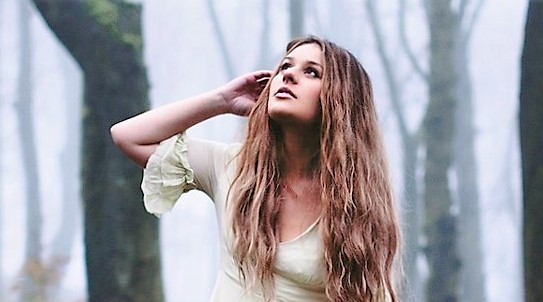
These inspire me differently each time because whatever I’m feeling in that moment impacts my reaction or sensation. We are all blessed with unique skill sets, it’s how we fine tune them in our art that matters.forest-white-dress-girl-morning-fog_1920x1200-3

Consider all the possibilities for this image, the stories will all vary with each telling more unique than the last. Our muses beg to be set free.

Author Connections 1

Connection with Authors I Enjoy

Standing in front of my desk, I looked at the different books. Clearly, I am an eclectic reader but my passion lies with poetry. Poetry for me is excising our inner demons and every poet has a signature style. I love entering a poet’s domain. I study initially what they rhymed or didn’t. How did they use alliteration?

I lingered with Seamus Heaney this morning. His rhymes are not smooth at all but they work well (dungarees and rosaries, whops and footsteps, joys and tallboys). There are the typical ones like (dose and rose) too. I enjoy reading all kinds of rhymes because some are smooth as glass and others are clunky as heels on a hardwood floor. What matters most is the minute detail that a poet uses to create his/her work. Heaney to me is down to earth with his plainly spoken words that give the reader an extraordinary view of everyday existence. There are no illusions with Heaney. He challenges demons with delightful anecdotes.

Poetry contributor William Logan comments, “The younger Heaney wrote like a man possessed by demons, even when those demons were very literary demons; the older Heaney seems to wonder, bemusedly, what sort of demon he has become himself.” [i] I feel like I’m battling demons in my writing all the time, I think we all do.

This is one of my favorites of Heaney’s poems.[ii]

Death of a Naturalist

BY SEAMUS HEANEY

All year the flax-dam festered in the heart

Of the townland; green and heavy headed

Flax had rotted there, weighted down by huge sods.

Daily it sweltered in the punishing sun.

Bubbles gargled delicately, bluebottles

Wove a strong gauze of sound around the smell.

There were dragonflies, spotted butterflies,

But best of all was the warm thick slobber

Of frogspawn that grew like clotted water

In the shade of the banks. Here, every spring

I would fill jampotfuls of the jellied

Specks to range on window sills at home,

On shelves at school, and wait and watch until

The fattening dots burst, into nimble

Swimming tadpoles. Miss Walls would tell us how

The daddy frog was called a bullfrog

And how he croaked and how the mammy frog

Laid hundreds of little eggs and this was

Frogspawn. You could tell the weather by frogs too

For they were yellow in the sun and brown

In rain.

    Then one hot day when fields were rank

With cowdung in the grass the angry frogs

Invaded the flax-dam; I ducked through hedges

To a coarse croaking that I had not heard

Before. The air was thick with a bass chorus.

Right down the dam gross bellied frogs were cocked

On sods; their loose necks pulsed like sails. Some hopped:

The slap and plop were obscene threats. Some sat

Poised like mud grenades, their blunt heads farting.

I sickened, turned, and ran. The great slime kings

Were gathered there for vengeance and I knew

That if I dipped my hand the spawn would clutch it.

Sources:

[i] https://www.poetryfoundation.org/poems-and-poets/poets/detail/seamus-heaney

Seamus Heaney, “Death of a Naturalist” from Opened Ground: Selected poems 1966-1996. Copyright © 1999

[ii] Seamus Heaney, “Death of a Naturalist” from Opened Ground: Selected poems 1966-1996. Copyright © 1999

There are ethics in Washington?

I am proud of her for stepping out of her comfort zone for her beliefs is something that needs to happen more often in our society for change to occur.

Vic Crain's avatarCRAIN'S COMMENTS

Sally Yates just did something extremely rare.  She made a decision based on principle rather than on political party or personal gain/risk.  She had to know she would be dismissed for doing what she did, but she did it anyway.

We don’t see that very often in politics in the US.  Members of both parties need to take note.  So should  voters.

Maybe Yates should be the next president.

View original post

Focus

Written by Jacob Ibrag Stopping for a moment, she tilted her head back and embraced being lost in the center of the forest. While most would’ve striven to find a way out, she wanted…

Source: Focus

Books and Women in History

I am an avid reader of women in history. Eleanor Roosevelt with all of her contributions and her flaws is one of my role models. I was delighted to discover two different authors with very different perspectives about her.

I’ve especially enjoyed all three books written by Blanche Wiesen Cook about her life. Ms. Cook presented a highly favorable accounting of Eleanor. Then I came across The Firebrand and the First Lady by Patricia Bell-Scott which introduced another portrait of Eleanor in a less favorable light with her interactions with Pauli Murray. As I read, I pondered the time frame and the restrictions placed on women, people of color and interference in their sexual preferences. Eleanor and Pauli lived in difficult times for women. Women have gained momentum but sadly, there are still many unresolved issues when it comes to race, equality, and humanity itself. Unfortunately, some people believe they are entitled to judge others.

What woman in history do you admire? Are there books about your choice you would recommend reading?

Regrettably, I feel our country has entered dark times with this present leadership. It saddens me immensely to see all the gains women have made in history tossed to the curb with a flick of a pen, coupled with the blatant male arrogance. It frightens me to think of a return to persecution based on race, religion or culture.

With that said, I feel Eleanor’s notable quotes apply now more than ever. Please don’t forget —

No one can make you feel inferior without your consent. 

You must do the things you think you cannot do.

Thank you for joining me for a cup of coffee this overcast Sunday afternoon in Jersey.

Godspeed !

Sources:

http://www.penguinrandomhouse.com/books/323875/eleanor-roosevelt-volume-1-by-blanche-wiesen-cook/9780140094602/

http://www.penguinrandomhouse.com/books/530718/eleanor-roosevelt-volume-2-by-blanche-wiesen-cook/9780140178944/

http://www.penguinrandomhouse.com/books/529256/eleanor-roosevelt-volume-3-by-blanche-wiesen-cook/9780670023950/

http://www.penguinrandomhouse.com/books/11129/the-firebrand-and-the-first-lady-by-patricia-bell-scott/9780679767299/

Passions beyond writing

Crocheting

Did you know the word crochet is a French word meaning small hook? Now, these little hooks come in a variety of different materials like for instance bone, bamboo, aluminum, plastic, and steel. My preference is aluminum because of how easily the yarn slides across the hook. I did give bamboo a try but soon discovered that my cat had gnawed on it giving it a rough texture and the yarn kept snagging. 😦

Crocheting appeals to me over knitting because each stitch is completed before I move onto the next one with the exception of Tunisian. That’s a different approach to crocheting and once completed is hot whereas typical crocheting has more breathability. I’ve done several scarves in this style and wrapping them like an infinity scarf was too much.

“1. Chain Stitch – the most basic of all stitches and used to begin most projects. 2. Slip Stitch – used to join chain stitch to form a ring. 3. Single Crochet Stitch (called Double Crochet Stitch in the UK) – easiest stitch to master Single Crochet Stitch Tutorial 4. Half Double Crochet Stitch (called Half Treble Stitch in the UK) – the ‘in-between’ stitch Half-Double Crochet Tutorial 5. Double Crochet Stitch (called Treble Stitch in the UK) – many uses for this unlimited use stitch Double Crochet Stitch Tutorial while the horizontal distance covered by these basic stitches is the same, they differ in height and thickness.”~wikipedia

One of the enjoyable things I discovered was a website offering free crochet patterns. http://www.free-crochet.com  The reason it excited me was the opportunity to try a pattern to see if it’s something I’ll really enjoy doing. The days of accumulating crochet books that collect dust are over for this girl.

My current project is a beanie style hat to match the baby blanket I just finished. It’s a modern granny square blanket that came together quickly while riding in the car on a road trip. I haven’t blocked it yet, so it has some ripples in but once that is done it will lie smooth.  The hat I’m doing in pale pink.

The only downfalls to crocheting for me are my three furballs that love to grab the ball of yarn I’m working with and roll it across the room.

Thanks for joining me.

Lyn

dsc_0056

Sources:

https://en.wikipedia.org/wiki/Crochet

http://www.free-crochet.com/

Writing Prompt

writers-digest

Worst Memoir Openings By: Brian A. Klems

“You’ve been tasked with ghostwriting a memoir for an extremely unusual person. You come up with many opening lines to the book, but one of them you write as a joke just to amuse yourself at how absurd the person’s story is. But now that person wants you to use that line. Share it…”

Discovered this on Writers Digest and thought I could have fun with this, while I’m working on my opening lines, what would be yours?